
Calendar
Kamara sisilipin extradition request ng US kay Quiboloy
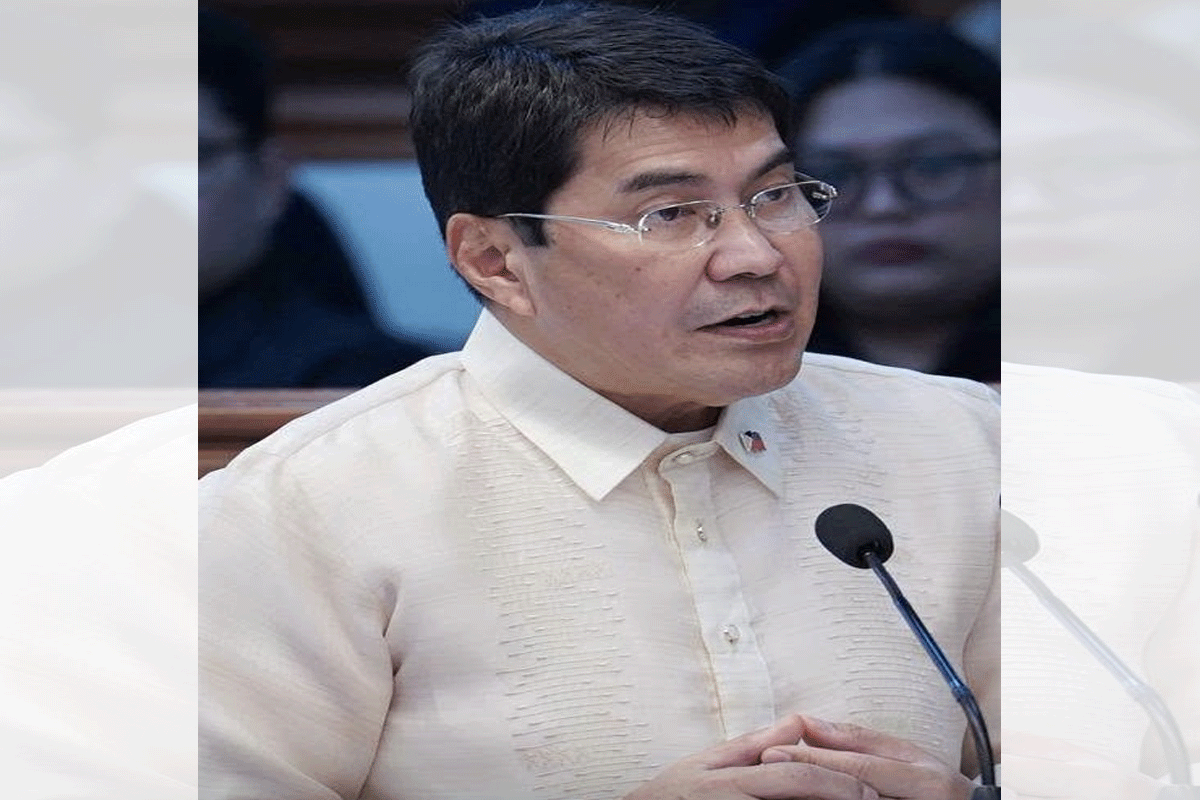
IIMBESTIGAHAN ng House Committee on Justice, na pinamumunuan ni Batangas 2nd District Rep. Gerville Luistro, ang extradition request ng Estados Unidos kay Pastor Apollo Quiboloy upang maging malinaw umano ang mga isyu ng proseso.
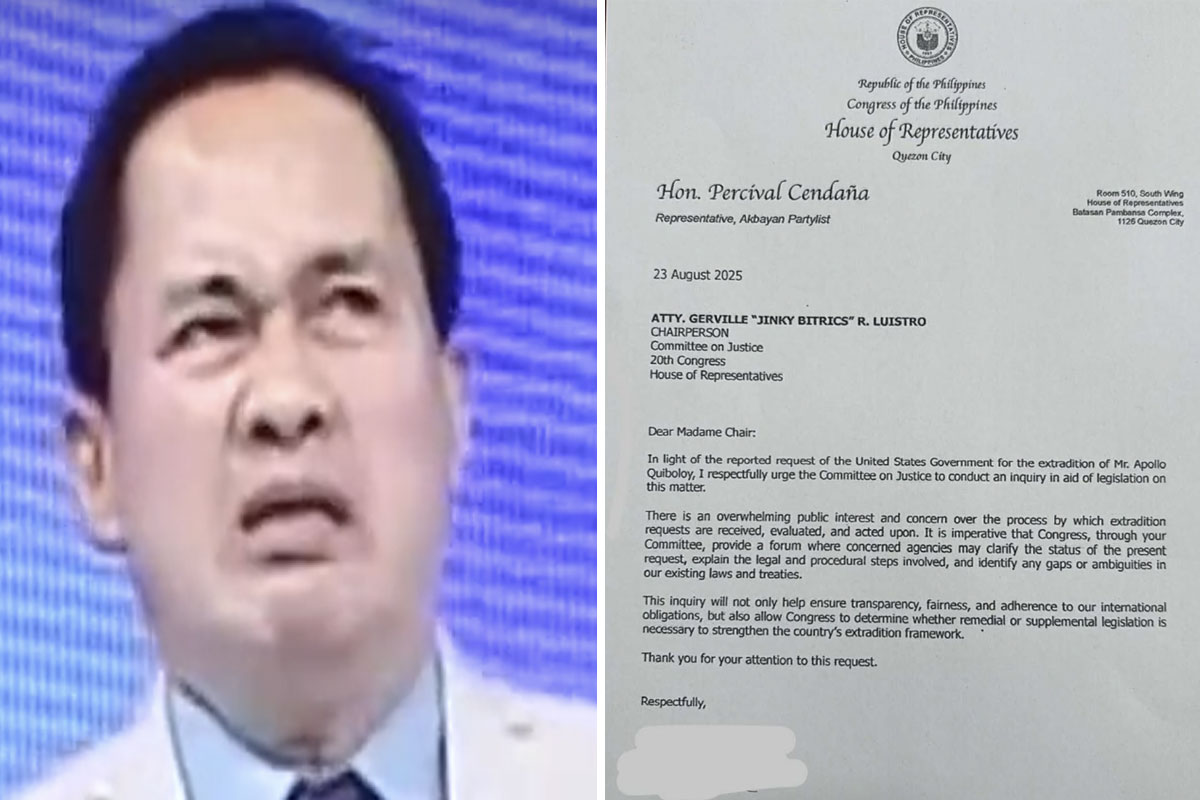
Ang pagsasagawa ng motu proprio investigation ay bunsod ng hiling ni Akbayan Party-list Rep. Perci Cendaña, na nanawagan sa komite ni Luistro na magsagawa ng inquiry in aid of legislation kaugnay ng extradition request kay Quiboloy.
“There is an overwhelming public interest and concern over the process by which extradition requests are received, evaluated, and acted upon. It is imperative that Congress, through your Committee, provide a forum where concerned agencies may clarify the status of the present request, expiain the legal and procedural steps involved, and identify any gaps or ambiguities in our existing laws and treaties,” ani Cendaña sa kanyang liham na binasa ni Luistro sa organizational meeting ng panel nitong Martes.
Ang pormal na mosyon upang ituloy ang imbestigasyon ay inihain ni Committee Vice Chairman, Bukidnon 2nd District Rep. Jonathan Keith Flores.
“I move that the Committee on Justice conduct an inquiry in aid of legislation in accordance not only with the request of Congressman Cendaña but also to cover PD (President Decree) 1069 and all other related laws on extradition,” aniya.
Inaprubahan ni Luistro ang mosyon matapos walang tumutol mula sa mga miyembro. Ngunit bago ito, nagsagawa muna ng masusing talakayan ang mga mambabatas hinggil sa pangangailangan ng imbestigasyon.
Aniya, ang dalawang mahalagang batas na dapat pag-usapan— ang 1994 extradition treaty sa pagitan ng US at Pilipinas at ang PD 1069 o ang Philippine Extradition Law na naisabatas noong 1977.
Ayon sa kanya, ang dalawang batas ay “silent” sa ilang mahahalagang detalye. “There are questions which answers could not be found in both law.”
“The following arguments or issue with respect to the existing laws on extradition in the Philippines were raised: one, whether an extradition process may be initiated by a foreign country when the extraditee has pending cases as well in the Philippines; second, what is the timeline between the request by the Department of Foreign Affairs (DFA) [and] the transmittal the Department of Justice (DOJ), in the same manner, what is the timeline between the receipt by the DOJ [and] the filing of the petition for extradition with the proper regional trial court,” aniya.
“Number three, it was also raised which court shall acquire jurisdiction over the request for extradition…whether the court which has jurisdiction over the local cases or the court where the extraditee is a resident of as mentioned in the treaty or PD 1069,” dagdag pa niya.
Ipinunto rin ni Flores na ang kasalukuyang mga batas ay hindi malinaw kung sino ang may awtoridad na pumili sa pagitan ng temporary surrender at deferred surrender ng extraditee—isang bagay na inamin din ni Luistro.
“We understand that in the treaty, and even in PD 1069 it was made clear that it will be the [DOJ] through the chief state counsel who will be filing the petition for extradition. However, once the same is granted…the question now is, who will exercise the authority to choose whether it will be temporary surrender or deferred surrender?” ani Luistro.
Nilinaw rin ni Luistro na ang pagkakasangkot ng Kingdom of Jesus Christ (KOJC) church founder na si Quiboloy sa imbestigasyon ay insidental lamang.
“This is not about prejudging anyone’s guilt. It is about upholding the rule of law, honoring our treaty commitments, and ensuring that victims see swift, fair, and transparent action,” diin ni Luistro sa isang panayam.
“Our message is simple: no one is above the law. We will ask the DOJ and DFA to walk the public through the precise legal options—temporary or deferred surrender—and the concrete timeline so justice is neither delayed nor denied,” wika ni Luistro.
Sinabi ni Luistro na pagsusumikapan ng kanyang komite na palakasin ang extradition framework ng bansa, tiyakin ang pagpapataw ng pananagutan, at patatagin ang pangako ng administrasyon sa pakikipagtulungan ng Pilipinas sa ibang bansa laban sa malulubhang krimen, habang iginagalang ang kalayaan ng mga hukuman.